🚢Origins and Background
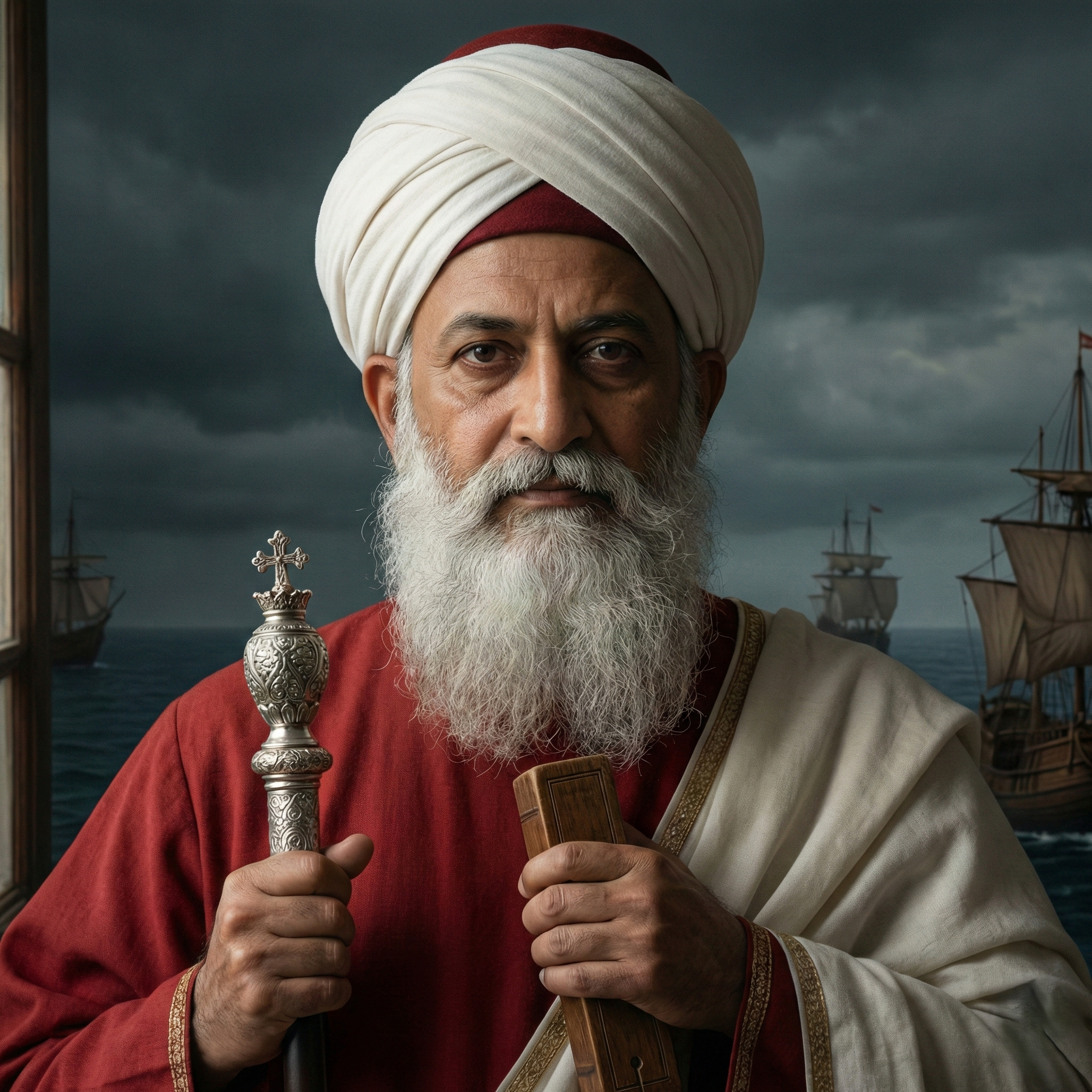
Knayi Thomman, known to the world as Thomas of Cana and revered in our tradition as "The Great
Merchant," is a pivotal figure in the history of the Syriac Orthodox Church in India. He hailed from
the region of Cana (Kynai) in Southern Mesopotamia (modern-day Iraq/Syria region), which was then
under the Persian Empire.
He was not merely a trader but a man of high nobility, wealth, and profound Christian faith. The
title "Knayi" signifies his origin from Cana, although it is also associated with the Syriac word
for merchant. He belonged to the Jewish-Christian tradition of the early Aramaic-speaking Church,
maintaining the pure traditions handed down from the Apostles.
In the 4th century, the Church in the Persian Empire was flourishing under the Catholicos of the
East, while the ancient St. Thomas Christians in Malabar (Kerala) were facing a period of spiritual
decline. Without bishops or priests to guide them, the community was weakening, and local customs
were beginning to overshadow the Apostolic faith.
👁️The Divine Vision and Commission
The migration of Knayi Thomman was not a mere commercial enterprise but a divine mission
orchestrated by the Holy Spirit. According to the sacred records of our Church, the Bishop of Uraha
(Edessa), Mor Yusef (Joseph), had a startling vision in his sleep. In this vision, he saw the plight
of the St. Thomas Christians in India, who were like "sheep without a shepherd," struggling to
maintain their faith without clergy or sacraments.
Moved by this revelation, Bishop Yusef approached the Catholicos of the East (often identified in
tradition as the Patriarch of Antioch, Mor Eustathius). The Patriarch convened a synod to address
this urgent matter. It was decided that a delegation must be sent to India to investigate and
revitalize the Church there.
Knayi Thomman, being a wealthy and influential merchant who traded in spices and had knowledge of
the route to Malabar, was chosen to lead this expedition. However, he did not go alone.
Understanding that the Church needs a community to thrive, a massive migration was planned—a
colonization of faith to strengthen the roots of Christianity in India.
⛵The Great Migration of AD 345
In the year 345 AD, a historic fleet set sail from the Persian Gulf. This was no ordinary trade
convoy. Under the leadership of Knayi Thomman, it carried a complete ecclesiastical and social
structure: Bishop Uraha Mar Yusef, several priests (Kathanars), and deacons.
Accompanying the clergy were approximately 400 people comprising 72 families from 7 prominent clans.
They brought with them their liturgy, their sacred books, and their distinct cultural traditions.
This migration is often described as the second foundation of the Church in India, infusing it with
new blood and the orthodox theology of the Syriac fathers.
The arrival of this group was a turning point. They did not come to conquer but to serve and to
save. They brought the connection to the Apostolic See of Antioch, ensuring that the Church in
Malabar would remain part of the universal orthodox communion.
👑Arrival in Kerala and Royal Privileges
The fleet landed at the ancient port of Kodungallur (Musiris), the gateway to India. Knayi Thomman,
with his diplomatic skill and merchant status, sought an audience with the local ruler, King
Cheraman Perumal. The King was impressed by the dignity and wealth of the newcomers.
Recognizing the value they brought to his kingdom, Cheraman Perumal granted Knayi Thomman and his
people the famous "Copper Plate Grants" (Cheppedu). These grants conferred upon the Christians 72
royal privileges, which included the right to use royal umbrellas, ride on elephants, walk on spread
cloths, and collect certain taxes.
These privileges elevated the Christians to the status of high-caste nobility, equal to the
Namboodiris (Brahmins) and Nairs. It gave the Christian community a social standing that protected
them from persecution and allowed them to thrive in a predominantly Hindu society. Knayi Thomman was
given the title "Perumal" (Lord) of the Christians.
🏘️Establishment of the Southist Community
Upon settling in Kodungallur, the King granted them land to build a town and a church. This town
came to be known as Mahadevar Pattanam (City of God). The community led by Knayi Thomman
settled on the southern side of the Cheraman Parambu, earning them the name "Southists"
(Tekkumbhagar), while the indigenous St. Thomas Christians resided on the northern side ("Northists"
or Vadakkumbhagar).
From this settlement arose the Knanaya community, who to this day preserve their distinct identity
through endogamy, maintaining the lineage of those original 72 families who migrated from
Mesopotamia. They served as a strong fortress for the Syriac Orthodox faith, fiercely protecting the
traditions and the liturgy brought by Bishop Uraha Mar Yusef.
Knayi Thomman and Bishop Joseph reorganized the Malankara Church. They introduced the East Syriac
(and later West Syriac) liturgy, established regular worship, ordained local priests, and firmly
re-established the connection between Malankara and the See of Antioch.
🏛️Legacy and Modern Importance
Today, the legacy of Knayi Thomman is monumental within the Syriac Orthodox Church. He is not merely
a historical figure but a spiritual forefather.
1. Ecclesial Connection: He is the bridge that connected India to the Syriac world.
Without his migration, the early St. Thomas Christians might have assimilated completely into the
local culture or disappeared. He ensured that the Church in India remained "Syrian" in its liturgy
and "Orthodox" in its faith.
2. The Knanaya Community: The community he founded remains a vibrant part of the
Universal Syriac Orthodox Church. They are known for their loyalty to the Holy Throne of Antioch and
their preservation of ancient folk songs (Margamkali) and customs that date back to the 4th century.
3. Defender of Tradition: In later centuries, when colonial powers tried to
latinize the Church, the descendants of Knayi Thomman were at the forefront of the resistance (such
as the Coonan Cross Oath), fighting to preserve the Syriac hierarchy and traditions.
Although not formally canonized in the same manner as the Apostles, he is venerated as a Confessor
and a Great Missionary. His memory is celebrated with great fervor, reminding us that the Church is
built not only on the blood of martyrs but on the sweat and dedication of faithful servants like
Knayi Thomman.
Prayer of Remembrance
O Lord, who in Your providence sent the faithful Knayi Thomman to the shores of Malabar to revive
Your flock, we thank You for his zeal and leadership. Just as he brought the light of the Syrian
tradition to India, strengthen us to hold fast to the true faith. May the legacy of the 72 families
inspire us to remain united in love and loyal to Your Holy Church. May the prayers of the holy
fathers who accompanied him be a fortress for us. Amen.