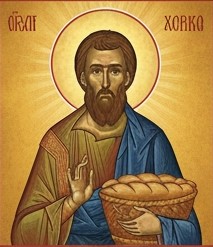
🕊️Name, Call, and Early Background
Philip—whose name in Greek (Φίλιππος) means "lover of horses" or "friend of horses"—appears among
the Twelve Apostles in the lists given by the Evangelists. In the Gospel according to John we read
that Philip was from Bethsaida, the city of Andrew and Peter. This small Galilean town, situated on
the northern shore of the Sea of Galilee, produced three of the Twelve Apostles, testifying to the
unexpected places from which God calls His servants.
When our Lord Jesus found Philip and said to him, "Follow Me," Philip immediately left all and
followed Him. This simple yet profound call reveals Philip's readiness and spiritual preparation.
Though the Gospel gives us little of his family or early life, the ancient tradition preserved by
Syriac and other Christian sources adds some illuminating details: some say he was married and had
children—in particular, daughters—who reached eminent sanctity. In the tradition of the Syriac
Orthodox faithful, this detail is accepted with humility, illustrating how the Lord's call can
transform ordinary family life into discipleship.
Philip's early spiritual formation is indicated by his readiness and his knowledge of the
Scriptures. The Gospel of John tells us that upon coming to Jesus, he immediately sought to bring
his friend Nathanael (Bartholomew) to Him, declaring: "We have found Him of whom Moses in the Law
and also the prophets wrote—Jesus of Nazareth, the son of Joseph." This shows that Philip had
grasped the Old Testament expectation of the Messiah, and when Jesus called him, he responded
quickly and then brought others along. Thus we see Philip's early background: a Galilean Jew of
Bethsaida, versed in the Law and the Prophets, ready to follow the Messiah when called, and willing
to invite others into that discovery.
The Call to Discipleship
"The following day Jesus wanted to go to Galilee, and He found Philip and said to him, 'Follow Me.'
Now Philip was from Bethsaida, the city of Andrew and Peter. Philip found Nathanael and said to him,
'We have found Him of whom Moses in the law, and also the prophets, wrote—Jesus of Nazareth, the son
of Joseph.'" — John 1:43-45
📖Ministry with Our Lord
Philip's place among the Twelve is attested throughout Christ's earthly ministry. Several key
episodes in the Gospels reveal his character and role. After his call, Philip found Nathanael and
invited him to "Come and see" Jesus, demonstrating his evangelistic zeal even from the beginning of
his discipleship. This impulse to bring others to Christ would mark Philip's entire apostolic life.
During the Feeding of the Five Thousand, when Jesus asked Philip where they should buy bread to feed
the multitude, Philip answered practically, "Two hundred denarii would not be enough for them, that
everyone might have a little." This response shows Philip's thoughtful, calculating nature—he was a
man who considered the practical realities of situations. Yet this very episode would teach him to
look beyond human calculations to divine possibility, as Jesus multiplied the loaves and fishes to
feed the thousands.
A particularly significant moment occurred on Palm Sunday when Greeks who had come to worship at the
feast approached Philip, saying, "Sir, we wish to see Jesus." That they came to Philip—perhaps
because his Greek name made him seem approachable, or because he was known to be welcoming to
Gentiles—reveals his role as a bridge between the Jewish and Gentile worlds. Philip then told
Andrew, and together they brought the Greeks to Jesus. This foreshadowed Philip's later mission to
the Gentiles in Asia Minor.
At the Last Supper, Philip made his most famous request: "Lord, show us the Father, and it is enough
for us." Jesus's response was both gentle and profound: "Have I been with you so long, and you still
do not know Me, Philip? Whoever has seen Me has seen the Father." This exchange reveals Philip's
sincere seeking heart—he was not afraid to ask the deep questions—and it also reveals one of the
most profound truths of Christian faith: that in Christ we see the very face of God. From these
episodes we see Philip's character: thoughtful and sincere, a man of questions, not afraid to bring
others to Christ, yet sometimes slow to comprehend the fullness of Christ's identity. In the Syriac
Orthodox tradition we see in him both the faith-seeker and the evangelist.
"Show Us the Father"
"Philip said to Him, 'Lord, show us the Father, and it is sufficient for us.' Jesus said to him,
'Have I been with you so long, and yet you have not known Me, Philip? He who has seen Me has seen
the Father; so how can you say, "Show us the Father"?'" — John 14:8-9
🔥Apostolic Mission and Ministry
After the Ascension of our Lord, the Apostles received the Holy Spirit at Pentecost and were sent
forth into the world. The tradition of the Syriac Church—as well as wider Orthodox tradition—assigns
to Philip a broad missionary field, especially in Asia Minor, Syria, and beyond. Philip was present
at the Upper Room and witnessed the descent of the Holy Spirit, receiving the power to preach the
Gospel boldly and to work signs and wonders in the name of Jesus Christ.
According to tradition, Philip preached extensively in Asia Minor, particularly in the region of
Phrygia, and most notably in the city of Hierapolis. He travelled through Syria, Lydia, Mysia, and
other parts of Asia Minor, establishing churches, baptizing converts, and ordaining bishops and
presbyters. Some traditions extend his mission further—even to Greece, Parthia, and possibly
Gaul—though these are less certain. What is clear from the Syriac tradition is that Philip was a
tireless missionary who brought the light of Christ to the Gentile world.
In Hierapolis, tradition records several miracles performed by Philip through the power of God. He
healed the withered hand of the city official Aristarchus, demonstrating God's power over physical
infirmity. He raised a dead child to life, showing that in Christ death has lost its sting. Perhaps
most dramatically, he destroyed a pagan serpent that was worshipped in a local temple, confronting
the demonic powers behind idolatry and freeing the people from spiritual bondage. These miracles
were not mere displays of power but signs pointing to the truth of the Gospel and the lordship of
Jesus Christ.
The Syriac Orthodox faithful honor Philip as one of the Twelve who, by the power of the Holy Spirit,
boldly extended the Gospel among the Gentiles and established local churches in the Apostolic era.
His ministry exemplifies the Church's call to mission, to cross cultural boundaries, to confront
spiritual powers, and to establish communities of faith that would endure through the centuries.
Philip's work in Asia Minor laid foundations upon which the Church would build for generations to
come.
👨👧👧Family and Daughters
One of the distinctive features of the tradition about Philip is his family life—particularly his
daughters. Though the Gospels give no explicit detail about them, the later tradition preserves a
remarkable account: Philip had daughters (variously reported as three or more) who were virgins and
prophetesses. The Greek tradition mentions three daughters buried in Hierapolis and one in Ephesus.
The Syriac tradition also affirms that his daughters attained eminent sanctity.
This aspect of Philip's life is significant for several reasons. First, it demonstrates that
apostleship and family life are not incompatible. Philip "left all things" in a spiritual sense—he
abandoned his nets, his former way of life, his own will—but his household became part of his
apostolic mission. His daughters, sanctified by the faith of their father and their own devotion to
Christ, served as prophetesses, assisting in local ministry, witness, and teaching.
Second, this tradition underscores the Christian ideal that following Christ transforms family life
into a community of discipleship. In the Syriac Orthodox Church, Philip's family life is seen as a
model: the call of God embraces the whole person and the whole community. His daughters' holiness
shows that sanctity is not limited to celibate monastics or unmarried apostles; rather, it can
flourish in families dedicated to Christ.
The daughters of Philip, in the tradition preserved by the Church, embody the principle that
Christ's call embraces multiple vocations. They served the Church through prophecy and witness,
contributing to the apostolic mission in ways that complemented their father's work. For the Syriac
Orthodox faithful, this tradition affirms that every member of the Christian family has a role in
building up the Body of Christ.
✝️Martyrdom and Death
According to the Orthodox tradition that the Syriac Church shares with the wider Oriental and
Eastern Orthodox world, Philip's martyrdom in Hierapolis of Phrygia stands as the culmination of his
faithful witness. The majority tradition places his death around the year 80 AD, making him one of
the later martyrs among the Twelve Apostles.
The mode of Philip's martyrdom is recorded in various ancient sources. Many accounts state that he
was crucified, some specifying that he was hung upside down in imitation of our Lord's humility and
in echo of the humility Philip himself had learned throughout his life. The Coptic Synaxarium
remembers: "He was tortured severely, then they crucified him head down… He delivered his soul into
the hands of Christ and received the crown of apostleship and the crown of martyrdom in the year 80
A.D."
Some traditions record that at his martyrdom, an earthquake struck the city, a sign of divine
intervention and judgment against those who shed innocent blood. Whether this is historical or
symbolic, it represents the truth that the blood of the martyrs shakes the foundations of earthly
kingdoms while establishing the eternal Kingdom of God. Philip's death was not defeat but
victory—the completion of his apostolic witness and his final conformity to Christ.
Tradition says Philip's body was buried in Hierapolis and venerated there by the faithful. His tomb
became a site of pilgrimage, and his relics were later translated to various locations, including
Rome. The archaeological site of Hierapolis still bears witness to early Christian presence, and the
martyrium of Philip—a octagonal church built over what was believed to be his burial site—testifies
to the ancient veneration of this holy apostle.
The Crown of Martyrdom
"He was tortured severely, then they crucified him head down… He delivered his soul into the hands
of Christ and received the crown of apostleship and the crown of martyrdom." — From the Coptic
Synaxarium
⛪Significance in the Syriac Orthodox Tradition
From the perspective of the Syriac Orthodox Church, the biography of Apostle Philip carries multiple
layers of significance. First, Philip represents apostolic continuity. The Syriac Orthodox Church
emphasizes its apostolic origins, grounded in the Twelve and their successors. Philip, as one of the
Twelve, stands within the living succession of the Church. His ministry in the East—in Asia Minor
and Syria—resonates with the eastward spread of the Gospel, echoing the mission to the "ends of the
world."
Second, Philip exemplifies evangelistic zeal for the Gentiles. His ministry among Hellenized Jews
and Gentiles, such as the Greeks who came to him at the feast, demonstrates the Church's call to
evangelize beyond the confines of Israel. The Syriac Orthodox tradition—centered in Antioch and
extending throughout the East—sees in Philip a pioneer for reaching non-Jewish peoples, a pattern
that would mark the expansion of Syriac Christianity throughout Asia.
Third, Philip's family life demonstrates the integration of ministry and family. The tradition of
Philip's daughters aligns with the Syriac Orthodox emphasis that holiness is for every Christian, in
every vocation. Philip illustrates that one need not choose between family and discipleship; rather,
family life itself can become a vehicle for mission and sanctification. This counters any false
dichotomy between monastic or clerical life and lay family life.
Fourth, martyrdom holds a special place in Oriental Orthodox spirituality. Philip's willingness to
suffer, to be mocked, tortured, and executed—yet to entrust his life into the hands of
Christ—becomes a timeless example. The Syriac Orthodox liturgical memory honors this witness,
inviting the faithful to follow Philip's footsteps in loving Christ even unto death. Martyrdom is
not seen as tragedy but as the supreme act of witness and love.
Finally, Philip's missionary legacy emphasizes the establishment of local churches. In the Syriac
Orthodox worldview, Philip's presence in Asia Minor, founding churches and ordaining bishops,
corroborates the apostolic foundations of local churches. The Churches of Syria, Mesopotamia, and
Cappadocia remember their roots in this first wave of apostolic mission. Philip stands as a
spiritual father to these ancient Christian communities, and his memory is cherished as part of the
Church's foundation.
🙏Spiritual Lessons from Philip's Life
Reflecting on Philip's life, the faithful of the Syriac Orthodox Church derive several spiritual
lessons for our own journey in Christ. First, we see the virtue of prompt obedience. When Jesus
called Philip, he did not hesitate. "Follow Me" resulted in an immediate response. This teaches us
to cultivate readiness to hear and follow the Lord's voice, without delay or excuse.
Second, Philip demonstrates evangelistic urgency. He did not keep his discovery of the Messiah to
himself; immediately he went to bring Nathanael. Later, he preached widely throughout Asia Minor.
Our calling is likewise to share the Gospel—not to hoard our faith as a private possession, but to
invite others to "come and see" Jesus Christ. Every Christian is called to be an evangelist in some
measure.
Third, Philip's life shows the importance of scriptural grounding. His early knowledge of the Law
and the Prophets prepared him to recognize Jesus as the fulfillment of God's promises. The Church
emphasizes that sound doctrine and deep study of Scripture prepare us for effective mission. We
cannot give what we do not have; we must first be filled with the Word of God.
Fourth, Philip models the integration of faith and questioning. It is significant that Philip asked,
"Show us the Father." Rather than reproach him harshly, Christ responded with patient teaching. In
the Syriac Orthodox tradition, sincere questions are part of growth in faith. We are encouraged to
wrestle with our doubts and bring our questions to the Lord, confident that He will lead us into
deeper understanding.
Fifth, Philip's martyrdom teaches that witnessing to the Gospel entails cost. Following Christ is
not always comfortable or safe. Philip suffered torture and crucifixion for his faith. For the
Syriac Orthodox faithful—many of whom have faced persecution throughout history—Philip's example
reminds us that suffering for Christ is not a mark of failure but of true discipleship. The cross
comes before the crown.
Sixth, Philip's holistic life—his family, his daughters, his ministry—demonstrates that holiness
encompasses all spheres of life. There is no sacred-secular divide in authentic Christian living.
Every relationship, every responsibility, every aspect of life can be sanctified and offered to God.
Philip shows us that discipleship is not compartmentalized but integrated into the whole of life.
Finally, Philip's mission to Asia Minor and the peripheries mirrors the Syriac Orthodox Church's
historical mission to regions beyond the Roman Empire. His willingness to go to distant lands, to
cross cultural boundaries, to learn new languages and customs in order to preach Christ, challenges
us to similar courage. The Gospel is for all nations, and we must be willing to go wherever God
sends us.
📿Liturgical Observance and Prayer
In the Syriac Orthodox Church, the Holy Apostle Philip is commemorated with reverence. His feast is
celebrated on November 14 in many Orthodox calendars as the Holy and All-Praised Apostle Philip. On
this day, the faithful gather to honor his memory, to reflect on his life and witness, and to seek
his intercession before the throne of God.
The troparion for Saint Philip prays: "O Holy Apostle Philip, intercede with our merciful God that
He may grant our souls forgiveness of transgressions." This simple prayer encapsulates the
relationship between the saints in glory and the Church militant on earth. We believe that the
saints, united with Christ in heaven, pray for us and assist us in our spiritual struggles. Philip,
who once brought Nathanael to Jesus, now brings our prayers before the Lord.
The faithful meditate on Philip's witness in various ways. Some reflect on his immediate response to
Christ's call and ask for grace to obey God's voice promptly. Others contemplate his evangelistic
zeal and pray for boldness in sharing their faith. Still others remember his martyrdom and ask for
strength to endure whatever trials may come. Philip's life offers multiple entry points for prayer
and spiritual reflection.
Many churches throughout the Christian East and West are dedicated to Saint Philip, serving as
centers of pilgrimage and devotion. For believers in the Syriac tradition, his story is an
inspiration for mission, for living the Gospel faithfully, for endurance in persecution, and for
hope in the Resurrection. When we celebrate his feast, we are not merely remembering a historical
figure; we are joining with the communion of saints in praising God for His work through His
servants.
Prayer to St. Philip
"O Holy Apostle Philip, you who followed the Lord swiftly, brought others to Him, labored in the
field of Asia Minor, and gave your life for Christ—entreat the merciful God for us, that He may
cleanse our hearts, direct our steps in His path, strengthen us in our mission, and preserve us in
the one true Faith until the end. Through your prayers may our souls find forgiveness, our walk be
steadfast, and our hope unshaken. Amen."
⭐Philip's Enduring Legacy
The Holy Apostle Philip stands in the Church's memory as a man of faith, mission, sacrifice, family,
and abiding union with Christ. As one of the Twelve, he witnessed the fullness of our Lord's
ministry—from the call by the Sea of Galilee, through the miracles and teachings, to the Passion,
Resurrection, and Ascension. After Pentecost, empowered by the Holy Spirit, he carried that mission
into the world, preaching in distant lands, establishing churches, working miracles, and ultimately
sealing his witness with his blood.
In the dioceses and parishes of the Syriac Orthodox Church, Philip's example lives on. His immediate
response to Christ's call challenges us to examine our own readiness to follow. His evangelistic
zeal—seen in bringing Nathanael to Jesus and preaching throughout Asia Minor—inspires us to share
our faith boldly. His integration of family life and ministry shows us that holiness is not
restricted to one vocation but is accessible to all. His martyrdom reminds us that true discipleship
may require suffering but always leads to glory.
Philip's life also reminds us of the Church's missionary nature. The Gospel is not meant to be kept
within comfortable boundaries; it must go forth to the ends of the earth. Philip crossed cultural
barriers, learned new languages, adapted to different contexts—all in service of the one unchanging
Gospel. The Syriac Orthodox Church, which has historically been a missionary church extending from
India to Europe, sees its own calling reflected in Philip's ministry.
As we conclude this fuller biography of Saint Philip, we are reminded that his story is not merely
ancient history. It is part of the living tradition of the Church, a tradition in which we
participate. When we celebrate his feast, venerate his icons, sing his troparia, and invoke his
intercession, we affirm our connection to the apostolic faith. We stand in continuity with Philip
and the Twelve, with the martyrs and confessors, with all the saints who have gone before us bearing
witness to Christ.
May the life of Saint Philip the Apostle encourage each of us to say with sincerity: "Here I am,
Lord; I will follow You." May we bring others to Christ as Philip brought Nathanael. May we remain
steadfast under trial as Philip remained under persecution. May we, like him, be apostles—not
necessarily by office, but by love, by fidelity, by witness. And may we, through the prayers of
Saint Philip and all the saints, attain to the Kingdom of Heaven and behold the face of God, whom
Philip longed to see. Amen.